Source Backpack Type Spiral Potato Cutter for Chips, Sticks, and Sides
Find and compare 30 backpack type spiral potato cutter models from Chinese manufacturers. Evaluate specifications like 304 stainless steel construction, 80W power, and capacities up to 500kg/H to select the right equipment for your food processing needs; compare the available evidence and request quotations based on your requirements.
Key considerations
Products List






Comprehensive Sourcing Guide
Backpack Type Spiral Potato Cutter Sourcing Guide
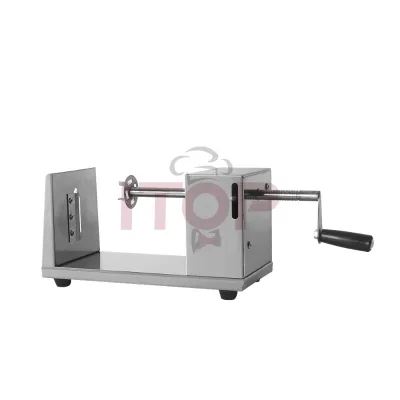
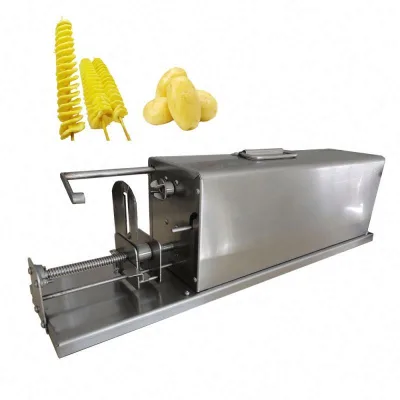
The market for automated vegetable processing equipment often features compact, high-efficiency units designed for specific agricultural tasks. While the core keyword suggests a portable backpack unit, the available data indicates a broader range of stationary industrial cutters, including models like the HT-STJ40D and HT-ST200L. Buyers must carefully distinguish between portable handheld devices and the stationary electric or gas-powered machines listed, which are typically designed for fixed installation in processing facilities rather than manual carrying.
Procurement decisions should focus on matching the machine's discharge specifications to the intended production volume. The observed listings include units with capacities ranging from 150 to 500 kilograms per hour, suggesting that the "backpack" descriptor may be a misclassification for certain industrial models. It is critical to verify the physical dimensions and weight, as some units weigh up to 48kg, making them unsuitable for manual transport despite potential marketing claims regarding portability.
Product Scope and Observed Listing Signals
Buyers should analyze the observed price range of 0.9 to 8899 USD to understand the significant variance in equipment quality and capacity. This wide spectrum suggests that low-cost listings may represent basic components or accessories, while higher-priced units likely include advanced features such as automatic grading and thermal processing capabilities. Understanding this price stratification helps in filtering out listings that do not meet the specific operational requirements of a commercial kitchen or processing plant.
The material composition is a primary signal for durability and food safety compliance in this category. Most observed units are constructed from 304 stainless steel or food-grade stainless steel, which is essential for preventing corrosion and ensuring hygiene during vegetable processing. However, buyers must verify that the specific model they select explicitly states this material grade, as some listings may only mention generic stainless steel without confirming the 304 standard required for food contact applications.
Technical Specifications to Verify
Technical verification must begin with the power source and voltage compatibility, as the data shows units operating on both 220V and 380V electric systems. Some models also support gas heating methods, requiring buyers to confirm the specific energy type required for their facility's infrastructure. Ensuring the voltage matches the local grid is a critical step to prevent equipment failure or safety hazards during operation.
Dimensional and capacity specifications are equally vital for operational planning and space allocation. The observed models vary significantly in size, with standard dimensions ranging from 270mm to 830mm in length, and capacities spanning from 150kg/H to 500kg/H. Buyers should cross-reference the discharge length and diameter, such as the 25cm discharge length or 8.5cm diameter found in specific listings, to ensure the machine can handle the intended vegetable sizes, such as bamboo sticks or potatoes within the specified limits.
Compliance and Safety Documentation
Safety compliance is a non-negotiable aspect of sourcing industrial cutting machinery, particularly when the equipment involves high-speed rotating blades and thermal processing elements. The presence of CE certification in the observed data indicates that some suppliers adhere to European safety standards, but buyers must request valid certification documents for the specific model before purchase. Relying solely on the presence of a certification label without verifying the corresponding test reports can expose the buyer to significant liability risks.
Documentation regarding machinery test reports and warranty terms provides essential protection for the buyer against premature equipment failure. While some listings indicate that machinery test reports are not available, others offer a one-year warranty covering core components like motors and gears. Buyers should prioritize suppliers who can provide comprehensive documentation for their specific unit, ensuring that the warranty covers the critical mechanical parts that are prone to wear and tear during high-volume processing.
Cost Drivers and Commercial Terms
The minimum order quantity (MOQ) is a significant commercial factor that varies widely across the observed listings, ranging from a single set to as many as 5000 units. This variation suggests that some suppliers cater to individual buyers or small pilot projects, while others focus on bulk industrial distribution. Understanding the MOQ requirements early in the negotiation process helps buyers avoid unnecessary inventory costs or the inability to secure a deal due to volume constraints.
Packaging and logistics standards also influence the total cost of ownership and the condition of the equipment upon arrival. The data indicates that units are typically shipped in fumigation-free wooden cases or boxes, which are designed to protect the machinery during transit. Buyers should verify that the packaging dimensions align with their shipping constraints and that the fumigation-free status meets the import regulations of their destination country to avoid customs delays or additional fees.
Supplier Qualification and Quality Control
Supplier qualification should involve a thorough review of the place of origin and the specific manufacturing capabilities of the vendor. The observed data points to manufacturers located in Henan and Guangdong, China, regions known for their industrial machinery production. Buyers should verify the specific factory location and request evidence of their production capacity to ensure they are dealing with a legitimate manufacturer rather than a trading company with limited oversight.
Quality control processes must be validated through the supplier's ability to provide detailed specifications for core components and material grades. The listings mention specific components like motors and gears, which are critical for the machine's longevity and performance. Buyers should request a detailed bill of materials and inquire about the supplier's internal quality assurance protocols to ensure that the stainless steel construction and electrical systems meet the required industrial standards.
Long-Term Procurement Checks
Long-term procurement success depends on the availability of spare parts and the clarity of the maintenance requirements for the equipment. Since the machinery relies on specific core components like motors and gears, buyers must confirm the lead time for replacement parts and the availability of technical support for repairs. A lack of clear information on spare parts availability can lead to extended downtime and increased operational costs over the life of the machine.
Performance monitoring and capacity verification are essential for ensuring the equipment continues to meet production targets over time. Buyers should establish a baseline for the machine's output, such as the observed 150-500kg/H capacity, and regularly compare actual performance against these figures. This proactive approach allows for early detection of wear or inefficiency, ensuring that the investment in the spiral potato cutter remains productive and cost-effective throughout its operational lifespan.
FAQs
What is the power consumption of the electric spiral cutter?
The electric spiral cutter operates at 80W power with a 220V voltage supply. This low energy consumption ensures efficient processing for small to medium production lines. The device uses an electric power source and features automatic grade operation for consistent performance. It is designed for thermal processing applications, making it suitable for preparing chips and other vegetable products with minimal energy usage.
Can the machine handle bamboo sticks or similar materials?
Yes, the machine is suitable for processing materials with a diameter of 5mm or less and a length of 40cm or less. This specification allows for the cutting of bamboo sticks and similar slender items. The cutter is designed to handle these dimensions effectively, ensuring precise cuts for various applications. Users should ensure the input material fits within these size constraints for optimal performance and safety.
What is the production capacity of the spiral cutting machine?
The spiral cutting machine has a production capacity ranging from 150 to 500kg per hour. This wide range accommodates different operational needs, from smaller batches to larger industrial outputs. The capacity depends on the specific model and configuration used. This efficiency makes the machine suitable for various food processing applications, ensuring high throughput while maintaining consistent quality in the final product output.
Is the machine constructed from food-grade stainless steel?
Yes, the machine is constructed from 304 stainless steel, which is food-grade material. This ensures durability and resistance to corrosion, meeting hygiene standards for food processing. The use of stainless steel also facilitates easy cleaning and maintenance. The material choice supports long-term reliability and safety in commercial kitchen or industrial food production environments.
What certifications does the spiral cutter have?
The spiral cutter holds CE certification, indicating compliance with European health, safety, and environmental protection standards. This certification ensures the machine meets specific regulatory requirements for operation in many markets. Buyers should verify the certification details with the supplier to ensure it aligns with local regulations. The CE mark is a key indicator of quality and safety for industrial equipment.
What is the minimum order quantity for this machine?
The minimum order quantity for the spiral cutter is 1 set. This low MOQ allows buyers to test the equipment with minimal initial investment. It is suitable for small businesses or those looking to expand their production capabilities gradually. The flexible ordering policy supports various business sizes, from startups to established manufacturers, ensuring accessibility to the technology.